Custom and oversized galvanizing kettles
Up to 16.5 m (54 ft) long and 85 t. If your workpiece does not fit a standard bath, this is the conversation.
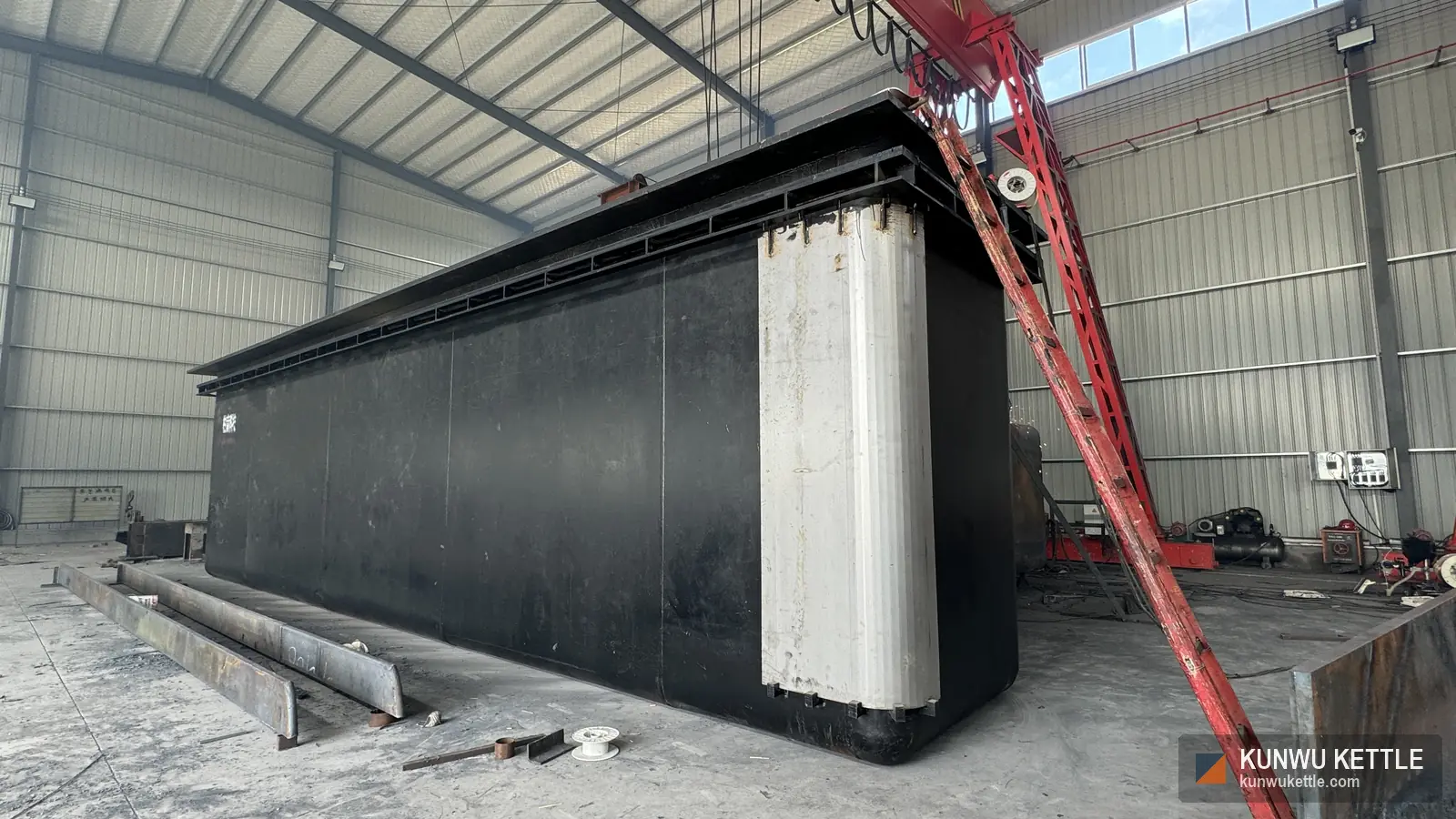
Where the limits actually are
| Metric | Imperial | |
|---|---|---|
| Maximum length | 16.5 m | 54 ft |
| Maximum width | 3.6 m | 11.8 ft |
| Maximum depth | 3.2 m | 10.5 ft |
| Maximum weight | 85 t | 94 short tons |
| Minimum size | 1.0 × 0.6 × 1.2 m | 3.3 × 2.0 × 3.9 ft |
| Single-unit works capacity | 150 t | 165 short tons |
For reference, the average kettle in North America is about 40 ft long, with a number of plants running 50–60 ft. Our 16.5 m covers 54 ft — the average and most of the large end.
Shipping something this size
A standard 40 ft container is about 12.0 m inside. Anything longer than that moves on flat rack or as breakbulk, and the inland leg from the works to the port needs an oversize permit.
We will tell you before you order what your site needs to receive it: the lift capacity, the approach, and the laydown area. A kettle that arrives at a plant that cannot unload it is a very expensive problem.
On arrival, if the kettle will wait before it goes into the furnace: coat it against rust, block it clear of the ground with one end higher than the other, and cover it. Under no circumstances allow water to collect inside the kettle. Store away from acids and alkalis.
What we will tell you before you order, not after. The lift capacity your site needs, the approach the trailer requires, and where the kettle can be set down. On an oversize unit these are not logistics details to be sorted out later — they decide whether the delivery works at all.
Send us your site access and unloading capability with the enquiry. If your plant cannot receive the kettle you are asking for, that is a conversation worth having at quotation stage.
What we need from you
- Largest workpiece, L × W × HPlus how it is jigged. This sets the minimum internal dimensions.
- Required throughput in t/hIncluding jigs. Zinc volume is 30–40× this figure.
- Heating type and furnace openingGas, oil or electric, and the existing furnace dimensions if this is a replacement.
- Site accessLift capacity available, approach road, and whether the kettle can be craned directly into the furnace.
Before you specify an oversized kettle
Bigger is not automatically better. Zinc volume should be 30–40× your hourly throughput — oversize the bath relative to what you actually run and you are paying to hold zinc molten that you do not need. The sizing guide works through it. If a standard configuration does fit, the four standard geometries are quicker and cheaper to build.
Send the workpiece drawing
We will come back with a sized kettle, a weight, a shipping method and a lead time — not a brochure.